A Holy Man’s Dream Intersects With Archaeologists’ Exploration

A Holy Man’s Dream Intersects With An Archaeologists Exploration

Elizabeth Prendiville of Saffronart shares news about an archaeological dig with an interesting motivation.

Dig at Fort of Raja Rao Ram Bux Singh

Dig at Fort of Raja Rao Ram Bux Singh


New York: In the vastly impoverished village of Daudiakala in northern Uttar Pradesh archaeologists have started an extensive dig looking for artifacts in the ruins of a centuries old fort belonging to Raja Rao Ram Bux Singh. This Hindu king was executed due to his involvement in an 1857 revolt against the colonial British. The inspiration for this dig came from two vastly different sources. A well-regarded local Hindu holy man dreamnt about buried treasures of immense value in this location. Swamy Shobhan Sarkar said the dead king himself had come to him in his dream and told him to seek out the buried gold. The holy man stated that his dream foresaw 1,000 tonnes of gold at the site. Prior to the swamy’s dream The Archaeological Survey of India started examining the excavation projected based off of results from the Geological Survey of India, which suggested that gold, and silver artifacts could be buried there. Regardless of whether the motivation was rooted in the mystic or scientific, a media storm has be started around the promise of immense riches in the site. This is especially controversial in such a poor community and has inspired many local residents to come to the site. Police have had to enforce barriers to protect the archaeologist’s work.


Although the media has stoked the fantastical element of this excavation the AIS insists that it is for the single purpose of learning more about the forts historical heritage rather than finding a sizable sum of gold. Thus far a wall dated from the medieval period, earthen jars, pots, a hearth and a floor have been found. The dig is projected to take at least a month with the existing twelve-person team. As the excavation continues we shall see the validity in this holy mans dream!

Jangarh Singh Shyam’s Traditions in Folk Art Carry On Strong

 Elizabeth Prendiville of Saffronart on the continual legacy and evolution of Gond Folk Art. 

New York: The Gond tribe, one of the largest communities in India, is well known for utilizing song, dance, and arts both in times of mourning and immense celebration. There are deep seeded traditions in artistic festivals and various techniques in visual and performing arts. These include a strong attention to color and details in painting. In the 1980’s many of these artistic traditions were diluted by many of the men in these communities moving towards cities and larger areas of commerce for greater work opportunities. However, this movement for business also prompted folk traditions to be brought into the city centers. This wealth of tribal art brought into the cities prompted the Director of Bharat Bhawan, the multi-genre arts complex in Bhopal to construct the tribal art wing. With an established space for exhibiting tribal and folk work, artists in this tradition were fostered and their work became more successful.


Artist Jangar Sing Shyam was the first Gond artist to use paper and canvas for his paintings. The Bharat Bhawan became a jump off for Shyam’s work being shown throughout India as well as internationally. Tragically Shyam took his own life while working in Japan. Details as to why he chose to end his life so young in his successful career are still unclear. He is survived by his wife Nankusia Shyam who’s creativity was immensely sparked by her husband’s art career. Since his passing she has used painting as a way to carry on his memory and remain connected to him. While many artists have utilized his passing as a means to promote their own tribal art, Nankusia has been motivated to establish her family as the primary practitioners of true Gond art in the tradition of her husband.


Overtime Ms. Shyam’s work has gained confidence and she has truly defined her own independent style and aesthetic. Her work exhibits a strong narrative by utilizing fantastical elements such as mythical animals. In addition to his wife’s artistic practice, Jangarh Singh Shyam integrated his style into the community through an apprenticeship program while he was still alive. This has fostered a robust community of Gond artists in the tradition that is now termed “Jangarh Kalam”. Through the creative passion of his family and community, Jangarh Singh Shyam’s work will forever be remembered.

Women’s watches make a strong statement in Geneva

Elizabeth Prendiville of Saffronart discusses the new upward trend of female watch designs at the Geneva Watchmaking Grand Prix this year.

New York: In years past men’s watch designs have completely dominated the market for fine timepieces. Specifically, at the Geneva Watchmaking Grand Prix which documents the strongest designs and most pivotal trends of the year in watches. Designers such as Chanel, Chaumet, and Boucheron are among the lush collection of awarded designers. However, this year more award categories are devoted to feminine designs. This could be because more of these ladies’ watches are getting accolades for their beautiful design and function. The feminine finalists for these awards cover four out of ten of the main categories. This is a staggering amount compared to past years.

The most notable women’s watches of the 2013 Grand Prix include interesting aesthetics in partnership with age old traditional crafting and inventive new concepts. The Hermes Pendentif Boule pendant watch has received much attention for achieving this perfect balance. Rather than being adorned on a traditional wrist bracelet, this unique piece, which includes blue alligator leather, is displayed on a long chain rotating freely. In addition to this inventive design work, some featured watches gracefully skirt the line between jewelry pieces and timepieces. Bocheron Ajouree Hera jewellery watch, featuring a fantastical blue peacock made of sapphire and diamond is a perfect example of this. It was shortlisted for the Jewellery Watch Award alongside the Bulgari Jumping Hour Retrograde Minutes jewellery watch, which features a swath of precious colorful gems.

The winners of the 2013 Geneva Watchmaking Grand Prix will be announced at the 13th prize-giving ceremony on November 15th at the Grand Theatre de Geneve. Due to these stellar pieces feminine watches are sure to have a strong hold on the award-winning watch market for years to come. To learn more about the finalists for the 2013 Grand Prix, click here.

Heritage Reinvented: Inaugural exhibition

Ambika Rajgopal of Saffronart announces the inaugural exhibition- Heritage Reinvented at Tryon St. Gallery, London.

London: Five artists from different parts of the world unite to present Heritage Reinvented at the Tryon St. Gallery in London. In this exhibition, while drawing from their own individual socio-cultural peculiarity, they contest, challenge and transform the imagery and concepts normally associated with their own culture.

The Dark Cloud series, 2013, Kazim Ali. Image Credit:  © Tryon Street Gallery and Ali Kazim

The Dark Cloud series, 2013, Kazim Ali. Image Credit: © Tryon St. Gallery and Ali Kazim

The five artists are the Pakistani Ali Kazim, the New Zealander Brett Graham, the English Tom Hunter, the Ecuadorian Oscar Santillan and the Korean Meekyoung Shin. Though their standpoints are varied, their desire to amalgamate their socio-cultural past in order to speak to the present remains a constant in all their works. The artists attempt to create a new personal vocabulary through which they examine and revisit their heritage and often their own identity.

Ali Kazim originally trained as a miniature painter, but started his career as a circus-hoarding painter in the small town of Pattoki, Pakistan. His paintings, principally of lone masculine figures, have a multilayered tactility on account of many layers of watercolour pigments on textured paper, which imparts his work with a low relief quality.

Untitled (self portrait) series, 2013, Ali Kazim. Image Credit:  © Tryon St. Gallery and Ali Kazim

Untitled (self portrait) series, 2013, Ali Kazim. Image Credit: © Tryon St. Gallery and Ali Kazim

On display is a new series of work, where Kazim uses the framework of the South Asian visual culture, but he relativizes it. He is influenced by the miniature style techniques, which in the Mughal period were used to symbolize official rank, wealth and status. However, he strips away the colorful splendor of the miniatures to reveal a quiet monochromatic introspection, and thus transforms the long-standing miniature tradition of painting. Similarly Kazim draws from the Bengal school’s wash technique as can be seen in his self-portrait, where he uses over 20 washes of pigment to achieve the desired effect. His portrait is meditative, melancholic and remains firmly rooted in its past, while examining the present.

In his previous works he used tracing paper in order to subdue the colours further, thus giving his portraits more psychological significance. Regarding this, Kazim clarifies, “I feel that the thematic concerns of the work are strengthened greatly through a careful selection and use of materials. They help me explore the human body in a more expressive way.”

Te Hokioi, 2008, Brett Graham. Image Credit: © Tryon St. Gallery and Brett Graham

Te Hokioi, 2008, Brett Graham. Image Credit: © Tryon St. Gallery and Brett Graham

In a similar manner, the other artists confront the stereotypes normally associated with their culture. Brett Graham is of European and Maori descent and his work depicts the amalgamation between Western modernism and indigenous spirituality. He shows the dichotomy of his dual heritage by juxtaposing modern instruments of warfare with traditional Maori designs. These colonial power symbols were considered to be spiritual symbols by the indigenous Maori. Graham’s work explores the effects of European colonialism on the indigenous Oceanic population.

After the Dragon, 2000. Tom Hunter. Image Credit:  © Tryon Street Gallery and Tom Hunter

After the Dragon, 2000. Tom Hunter. Image Credit: © Tryon St. Gallery and Tom Hunter

Tom Hunter’s photographs reposition the composition and symbolism of European and American masterworks. In his work After the Dragon, Hunter draws stylistically and symbolically from Pre Raphaelite artist Edward Burne-Jones’s painting Pan and Psyche (1872-1874). Part of his Life and Death in Hackney series, Hunter contemporizes Psyche and Pan, making them subcultural inhabitants set in the landscape of post-industrial urban decay. By plugging the legacy of the past into the context of the present, his work creates a dialogic exchange between the two binaries.

The show is on view from 3rd October to the 22nd November 2013.

http://www.saffronart.com/auctions/PostWork.aspx?l=7535

Untitled, 2005, Ali Kazim. Image Credit: http://www.saffronart.com/auctions/PostWork.aspx?l=7535

Saffronart has previously auctioned Ali Kazim’s work in the November 2012 Art of Pakistan Auction.

For more information about the exhibition, please click here.

Nasreen Mohamedi at Talwar Gallery

Elizabeth Prendiville of Saffronart shares a note about Talwar Gallery’s intimate look into Nasreen Mohamedi’s work, “Becoming One”. 

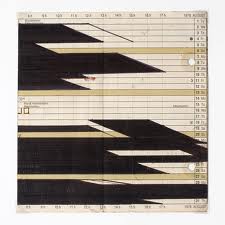
"Becoming One" by Nasreen Mohamedi

“Becoming One” by Nasreen Mohamedi

New York: This fall at the Talwar Gallery in New York a collection of artist Nasreen Mohamedi’s work will be on display in “Becoming One”. The exhibition will include photographs, drawings and diaries encompassing work from much of her lifetime (1931-1990). Her work utilizes universal themes in an aesthetic that is neither representational nor abstract. This independent quality has set her work apart in Indian art. Her series of drawings on graph paper appear to be embryonic life forms growing and evolving. This variety of subject matter encompasses her approach to the familiar and unfamiliar in our world.

"Becoming One" by Nasreen Mohamedi

“Becoming One” by Nasreen Mohamedi

“Becoming One” not only showcases her technical execution in her creative craft, but also shines line on the motives and perspectives of the artist herself. Her diaries, displayed in the show, hold a wealth of knowledge about the artist’s commitment continual exploration in her artistic practice. Through these diaries we see that her creative practice was truly embedded in her existence. These autobiographical notes contain Mohamedi’s continual conversion of life and art.

Nasreen Mohamedi

Nasreen Mohamedi

Nasreen Mohamedi’s work was unprecedented in India’s art scene. Her approach was completely unique and is seen as a crucial piece in the development of modernism in Indian art. “Becoming One” will be on display through November 24rd. This will be Nasreen Mohamedi’s third solo show at the Talwar Gallery.

To learn more about “Becoming One” please visit Talwar Gallery’s website here.