Charmi Gada Shah and Sujith SN at Vadehra Art Gallery

Ipshita Sen of Saffronart shares a note on the current exhibitions at Vadehra Art Gallery, New Delhi

New York: After a long hot summer, Vadehra Art gallery in New Delhi, welcomed the new art season with cutting edge solo exhibitions by artists Charmi Gada Shah & Sujith SN. The exhibitions are presented as part of the Foundation for Indian Contemporary Art’s (FICA) Emerging Artist Award 2011, shared by the two artists.

Charmi Gada Shah, A House on Joshi Lane, 2013

Charmi Gada Shah, A House on Joshi Lane, 2013. Image Credit: http://vadehraart.com/exhibition/viewDetails/109/3161

Charmi Gada Shah, a Mumbai based artist shows the underlying beauty in the undervalued and the forgotten to the audience through her aesthetic lens . Her solo show, titled “Neighbourhood Souvenirs”, includes work that can be defined as ‘architectural sculptures’, painstakingly created with construction debris around her Mumbai neighbourhood; salvaged wood, concrete blocks and plaster.

Charmi Gada Shah, Interior of an Abandoned Room, 2013

Charmi Gada Shah, Interior of an Abandoned Room, 2013. Image Credit: http://vadehraart.com/exhibition/viewDetails/109/3164

“It is a slow process that captures the degradation and loss of a particular time, architecture and lifestyle,” said Shah.

Her innovative re-constructs of broken interiors and once standing architecture, in exquisitely detailed and three dimensional miniature models, reveal untold stories and resonate stories of a forgotten past. Her work powerful in character, emanates the emotion of loss, instigating one to remember and celebrate the rich elements of a lost past.

Charmi Gada Shah, Still Life of a Landscape, 2010

Charmi Gada Shah, Still Life of a Landscape, 2010. Image Credit: http://vadehraart.com/exhibition/viewDetails/109/3167

“A city has its own character and globalization tends to remove these differences and introduce a similitude in the city. My work speaks of this loss of cultural moorings.”

 Sujith SN’s exhibition of watercolors titled “Psalms of an Invisible River” speaks in a dialect of Holbeinesque metaphors and meanings. His large-scale paper works, radiate a poetic and apocalyptic oeuvre. The undercurrent of his work communicates with an audience through the metaphor of an invisible river, as the title suggests. His work is narrative and conveys the underlying message of humanity’s relationship with the world and it’s other inhabitants. The invisible river that the artist illustrates could be any of the hundreds of forgotten and misused rivers that fertilize the Indian soil. His work thus portrays a double-edged metaphor, wherein one can relate it to the people and lives that go unseen and forgotten under the unappealing humdrum of urbanization.

Sujith SN, Psalms of an (In)visible River, 2013

Sujith SN, Psalms of an (In)visible River, 2013. Image Credit: http://vadehraart.com/exhibition/viewDetails/108/3145?pages=1

“For the last two years I have been working on a body of watercolors that examine the concept of ‘what makes a city?’ from a different lens. The river is an important motif because civilizations and urbanization often takes place on the banks of a river. Very often the river changes its color and direction as a result of this so-called civilization,” says Sujith.

Sujith SN, Let a Thousand Flowers Bloom III, 2013

Sujith SN, Let a Thousand Flowers Bloom III, 2013. Image Credit: http://vadehraart.com/exhibition/viewDetails/108/3155?pages=1

Both the artists bring forth the notion of reviving a forgotten grey past and provide the audience with a lens to see perspective and beauty in the hidden and undervalued.

Sujith SN, Testimony, 2012

Sujith SN, Testimony, 2012. Image Credit: http://vadehraart.com/exhibition/viewDetails/108/3152?pages=1

Charmi Gada Shah has acquired her Bachelors in Fine Art from the Raheja School of Art in Mumbai, and further pursued her masters in Fine Arts at The Chelsea School of Art in London. She is the recipient of the ‘Promising Artist Award from Art India and India Habitat Centre in 2009. She currently lives and works in Mumbai.

Sujith SN has acquired his Bachelors in Fine Art from the College of Fine Art, Trissur and Masters in Fine Arts at the Sarojini Naidu School of Fine Art, Performing Arts and Communication, University of Hyderabad. He currently lives and works in Mumbai and Kerala.

The exhibitions are on until September 12. For more information click here.

Diver-Cities II

Elisabetta Marabotto of Saffronart shares a note on the forthcoming exhibition at Latitude 28 in New Delhi

Arun Kumar HG, Untitled, 2012

Arun Kumar HG, Untitled, 2012. Image Credit: http://www.latitude28.com/index.php/works/newarrival/793

London: Starting from August 27, Latitude 28 presents Diver-Cities II. This exhibition is a celebration of cultural and urban diversities within India.

Baiju Parthan, End of Season, 2012

Baiju Parthan, End of Season, 2012. Image Credit: http://www.latitude28.com/index.php/works/newarrival/794

Eleven contemporary artists from different parts of India have been tasked to reflect on the idea of ‘city’ and its related concepts such as identity and globalization. Their works have then been brought together in one single exhibition to present their different interpretations and contemporary art practices.

Sarnath Banerjee, Lalbazaar Detective Department: Lower Pile

Sarnath Banerjee, Lalbazaar Detective Department: Lower Pile. Image Credit: http://www.latitude28.com/index.php/works/newarrival/804

Among the artists feature Baiju Parthan, Sarnath Banerjee, Gigi Scaria, Arun Kumar HG, Praneet Soi and Sudipta Das.

Gigi Scaria, Icarus, Yet Another Attempt, 2013

Gigi Scaria, Icarus, Yet Another Attempt, 2013. Image Credit: http://www.latitude28.com/index.php/works/new
arrival/908

Sunil Khilnani in The Idea of India noted: ‘India’s cities are hinges between its vast population spread across the countryside and the hectic tides of global economy, with its ruthlessly shifting tastes and its ceaseless murmur of the pleasures and hazards of modernity. This three-cornered relationship decisively moulds India’s future economic, cultural and political possibilities. The demographic drift across the world is unstoppably towards the urban.’ ‘Modern India’s political and economic experiences have coincided most dramatically in its cities – symbols of the uneven, hectic and contradictory character of the nation’s modem life. From the ancient sacred space of Benares to the decaying colonial pomp of Calcutta, from the high rationalism of Chandigarh to the software utopia of Bangalore, from Bombay’s uneasy blend of parochial politics and cosmopolitan to the thrusting new cities of the north. The evident urban disjuncture’s have enlivened distinct political sentiments. The real and imagined experience of the city has individually and together reconstituted both the nature and the range of the selves, the ‘identities’ that Indians can call their own.’

Praneet Soi, The Dream, 2008

Praneet Soi, The Dream, 2008. Image Credit: http://www.latitude28.com/index.php/works/newarrival/803

For more information on the exhibition click here.

The Shadow Play as Medium of Memory

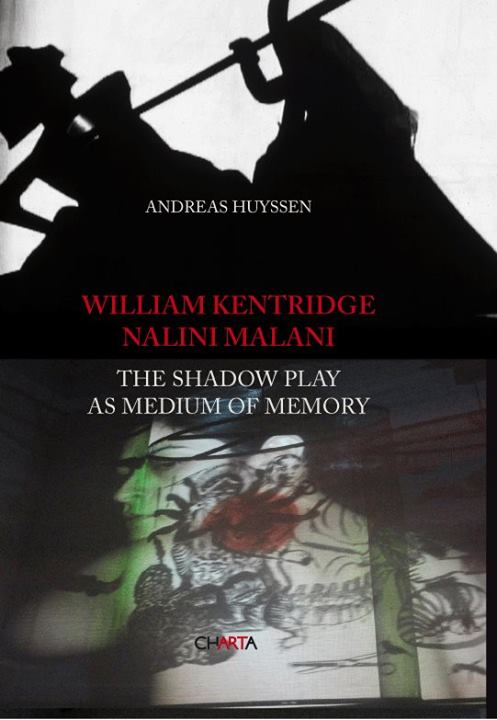
Ipshita Sen announces the newly released book on Nalini Malini and William Kentridge’s art of shadow play

William Kentridge Nalini Malani: The Shadow Play as Medium of Memory by Andreas Huyssen

William Kentridge Nalini Malani: The Shadow Play as Medium of Memory by Andreas Huyssen

New York: “The Shadow Play as Medium of Memory”, is an enchanting book, featuring works by two prominent artists of our time; William Kentridge and Nalini Malini. It is an exquisite comparison of their art works incorporating the use of shadow play as a medium of memory. Emphasis is placed on two significant installation pieces created by the artists for dOCUMENTA (13) Exhibition in Wassel, Germany 2012. These works were considered to be epitomes of their artistic careers; William Kentridge’s “The Refusal of time” and Nalini Malini’s “In Search of Vanished Blood”.

In Search of Vanished Blood, Nalini Malani @ Documenta 12

In Search of Vanished Blood, Nalini Malani @ dOCUMENTA (13). Image credit: http://www.flickr.com/photos/g_i_r_a_f/7690241934/sizes/h/in/photostream/

“In search of vanished blood” a colossal installation by Nalini Malini highlighted the prestigious 100-day exhibition. Being a refugee of the India partition, Nalini’s work explores the boundaries of gender and displacement, comprising of cultural imagery through mixed media installations. The installation involves light projecting onto painted acrylic cylinders that revolved, creating dramatic shadows on the wall. The imagery used on the cylinders was off Hindu Goddesses along side western icons creating an interesting juxtaposition between the two cultures. The installation had fantastic aesthetic dynamism stressing on the aspects of the social issues of gender, feminism, violence and religious fundamentalism.

William Kentridge’s “The Refusal of Time” was envisioned through the artist’s several encounters with composer Philip Miller and scientist Peter Galison. This video art piece explores the concept of different perspectives of time and the complexities associated with changing time. It combines drawing, music, dance, movies and concepts creating a dynamic theatrical performance, which brings Kentridge’s notion of questioning time on the pedestal.

The Refusal of Time by William Kentridge @ dOCUMENTA (13)

The Refusal of Time by William Kentridge @ dOCUMENTA (13). Image credit: http://documenta13blog.noz.de/wp-content/uploads/2012/07/890_0008_5505908_32040413.jpg

Both artists independently have works that share similar themes of traumatic pasts, partition, apartheid, expressing these aspects of their being in their own unique but aesthetically complex ways. They have been instrumental in creating a dialogue between modernism and the historical Avant-grade, which is appealing and encourages an audience to see things through the lens of a fresh new perspective.

The Shadow Play as Medium of Memory is definitely a must read!

Strange and Wondrous: Prints of India from the Robert J. Del Bonta Collection

Elisabetta Marabotto of Saffronart suggests a visit to ‘Strange and Wondrous: Prints of India from the Robert J. Del Bonta Collection’ at the Arthur M. Sackler Gallery in Washington

Nârâyana ou Vatapatrakai.” Jean Henri Marlet (1771–1847) and Co. after A. Géringer (19th century). Hand-colored lithograph on paper. From or after a French copy of J. J. Chabrelie, A. Géringer, Eugène Burnouf, and Eugène Jacquet, L’Inde Francaise (French India) (Paris: Chabrelie, 1827–35). Robert J. Del Bontà collection, E079.

Nârâyana ou Vatapatrakai.” Jean Henri Marlet (1771–1847) and Co. after A. Géringer (19th century). Hand-colored lithograph on paper. From or after a French copy of J. J. Chabrelie, A. Géringer, Eugène Burnouf, and Eugène Jacquet, L’Inde Francaise (French India) (Paris: Chabrelie, 1827–35). Robert J. Del Bontà collection, E079. Image Credit: http://www.asia.si.edu/exhibitions/current/delbonta.asp

London: Save the date for Arthur M. Sackler Gallery’s forthcoming exhibition in Washington: ‘Strange and Wondrous: Prints of India from the Robert J. Del Bonta Collection’.

The exhibition opens October 19 and runs until February 2014. The fifty artworks on display, which belong to the Robert J. Del Bontà Collection, include lithographs, engravings, aquatints and other prints illustrating sixteenth to twentieth century India through western eyes.

These artworks were made by merchants, soldiers, missionaries and other people who traveled to India and documented their stays there. These prints, being easily reproduced and widely circulated, spread knowledge as well as misconceptions about India.

Below you can enjoy a sneak peek of the collection’s highlights.

This slideshow requires JavaScript.


For more information click here.
“Readymades”: How Ordinary Objects Become Works of Art

Shradha Ramesh explores the art of some of the South Asian artists who continued this tradition initiated by Marcel Duchamp

New York: Ever wondered if stainless steel utensils would be an artwork? Well, for Subodh Gupta (born 1964), they are the medium of self expression. Coming from a modest family of merchants, Subodh’s works are an ode of his surroundings, the surviving lower working class represented by stainless steel tableware. Born in Khagaul, Bihar his repertoire ranges from painting and sculpture to photography, video and installations. According to Nancy Adajania: “Subodh Gupta’s works are littered with references to past and present experiences. Gupta’s art energizes the forms and imageries that we encounter everyday as part of this globalized world and reevaluates the aesthetic parameters of the present. His art questions the very notions of development and progress. He speaks of the local to the global through certain emblems such as stainless steel utensils, bicycle and milk cans, cow dung cakes suitcases, packages and trolley cast in bronze and aluminium.”

Subodh Gupta, Untitled

Subodh Gupta, Untitled. Image Credit: http://www.saffronart.com/auctions/PostWork.aspx?l=8284

Yet another artist who has used the indigenous motif to communicate the subversive emotion is Bharti Kher (born 1969). Bharti Kher’s art reflects on several sets of dualities such as: male-female, human-nature, modern- traditional and local-foreign. She uses ready-made bindi, an ensemble of Indian marriage and feminine beauty, to narrate eerie and repulsive paradoxes of modern life.

Bharti Kher, Indra's Net (6)

Bharti Kher, Indra’s Net (6). Image Credit: http://www.saffronart.com/auctions/PostWork.aspx?l=7257

“Bharti uses bindi as a means of transforming objects and surfaces. Her Bindi is used to cover the resin cast animals or other sculpture and even to decorate the large panels… often plays with everyday scenes and objects where she deals with the mundane.”

Jitish Kallat (Born 1974) says about his art: “My art is more like a researcher’s project who uses quotes rather than an essay, with each painting necessitating a bibliography,.. any visual material relevant to me.” Kallat’s works represent the fraught of urban discontent and turbulence especially through his fiber glass installation “Death of Distance” (2006). According to Deepak Ananth, French art historian and critic, “Kallat’s vision of his native city…is street-wise, slangy, hectic and rapid, impatient to register the myriad contradictory signals that come within the precincts of its scan. “

You can read more about “Readymades” here.