Susan Hapgood’s Performance Art in India for the Guggenheim UBS MAP Initiative

Manjari Sihare shares an insightful article on performance art in India by Mumbai based curator, Susan Hapgood commissioned for the Guggenheim’s UBS MAP Initiative on South East and South Asian Art  

New York: We recently blogged about a forthcoming exhibit at the Solomon R. Guggenheim Museum in New York titled No Country: Contemporary Art from South and South East Asia. The exhibition is the inaugural project of the Guggenheim UBS MAP Global Art Initiative, a multi-year program involving curatorial residencies, touring exhibitions, educational activities, and acquisitions for the Guggenheim’s collection. No Country: Contemporary Art from South and South East Asia will open this week on February 22nd and will be on view till May 22, 2013. In conjunction with the exhibit, the Guggenheim is hosting a collection of essays, commissioned from local experts on its website. We are delighted to re-post an essay by Mumbai based curator, Susan Hapgood on performance art in India. For other perspectives click here or watch this space for more.

BOMBAY FROM THE GROUND UP, PERFORMANCE INCLUDED by Susan Hapgood

As a curator new to Mumbai, I found the metropolis thriving, fascinating—and sometimes maddening. There is a tight-knit contemporary art community in the city that has become accustomed to international curators swooping in and out like the ubiquitous Bombay crows. They flit around the city, alighting briefly to snap up morsels of sustenance. Yet no bird’s-eye view, colleague’s description, or online research could substitute for sustained experience on the ground. I arrived in India for a sabbatical of sorts in September 2010, and my method of acclimating was to call as many artists as possible right away, to find out what they were up to and who was most interesting. Within about six months, I had founded a contemporary art exhibition space known as the Mumbai Art Room, a small nonprofit that provides a platform for artistic experimentation.

My first impression of the Bombay art scene was simplistic. I observed an abiding preference for painting and sculpture, built on a solid foundation of local modernism that was established in the late 1960s and early ’70s. But looking closer, I realized that performance, photography, video, and social practice were also quite healthy in a communal atmosphere characterized by mutual respect, open discourse, and experimentation. Performance art, it seems to me, is particularly strong; there is a lot brewing, and the vibe is infectiously positive. A couple of caveats, however: both public and private funding for the arts is grossly inadequate, and right-wing Hindu extremism is a constant potential source of swift censorship and draconian repression.

Tejal Shah, still from Between the Waves, 2012. Five-channel color and black-and-white video installation with sound, 85 minutes. Image courtesy: The Guggenheim New York

Tejal Shah, still from Between the Waves, 2012. Five-channel color and black-and-white video installation with sound, 85 minutes. Image courtesy: The Guggenheim New York

One of the two artworks I want to discuss here, though made in India, would likely be shut down in a heartbeat if it were shown in public in Mumbai. It is a 2012 video installation by Mumbai artist Tejal Shah, who self-identifies as multidisciplinary, feminist, queer, and political. Titled Between the Waves, this multi-channel work was exhibited at Documenta 13 and features Shah and others as fictitious creatures—“humanimals”—cavorting and engaging in various activities, some of them explicitly erotic. It is a strange, beautiful, and imaginative work, but also one that pushes uncomfortably at the boundaries of societal expectations around transgender identity, sexuality, and narrative form. Between the Waves garnered a decidedly mixed critical response, and Shah herself has described the work as “awkward” and “unbounded.” Shah is a bold and innovative artist, yet she is also vulnerable and in need of critical affirmation at a time when, mid-career, she cannot expect broad local support.

Tushar Joag, Hypohydro Hyperhighrise, 2011. Public performance. Image courtesy: The Guggenheim, New York

Tushar Joag, Hypohydro Hyperhighrise, 2011. Public performance. Image courtesy: The Guggenheim, New York

The second artist I want to spotlight, Tushar Joag, has little in common with Shah except for a use of innovative performative methods to address politically charged subject matter. Joag again and again probes the problematic and inequitable development of land in Mumbai in particular, and in India in general. He cannot stomach the greed, unfair distribution of basic resources, and resulting displacements of disenfranchised citizens. In Hypohydro Hyperhighrise, 2011, for example, a project that was commissioned as a part of a series of public art interventions throughout Mumbai, he presents a simultaneously entertaining and incisive scenario. For this work, Joag hired a troupe of boys and young men to form a 20-foot-tall human pyramid and water fountain. The pyramid component of this acrobatic stunt referenced a familiar annual religious tradition celebrating the Hindu god Krishna. Joag cleverly repurposed the action to refer instead to inadequate planning around the skyscraper apartment buildings that have sprouted throughout this densely populated city, and the water shortages that have resulted from it. The message was dead serious, while the atmosphere was quasi-carnivalesque. Curious crowds gathered wherever the work was performed.

All over this country, one bumps into street processions, public acts of political activism, folk performances, and religious rituals. Within the more circumscribed field of contemporary art, performance has been nurtured for over a decade by KHOJ International Artists’ Association in New Delhi, and more recently by Mohile Parikh Center and Art Oxygen in Mumbai. Even when new works are too sensitive to present locally, they still manage to resonate in the international art scene. Myriad forms of public expression, action, and acting out are very much a part of this culture’s DNA—in the world’s largest democratic country, they simply cannot be suppressed.

Susan Hapgood is a curator and Founding Director of the Mumbai Art Room and a Senior Advisor to Independent Curators’ International (ICI).

New Islamic Art Galleries at the Louvre

Guest blogger Saranna Biel-Cohen explores the stunning new galleries of Islamic art at the Louvre in Paris

Paris: Last year we featured a series of blog posts about the new Islamic wing of the Metropolitan Museum of Art in New York. 2012 was also the year of another significant opening in the world of Islamic art: Islam, at the Louvre in Paris.

Director of Islamic Art, Sophie Makariou explains the title was chosen to incorporate the expanse of the Islamic world throughout the centuries from Spain to India, The Empire of Islam, as it was known. Islam highlights cultural value of these works and their historical contribution spanning 1,300 years and three continents.

Bellini structure
Image credit: http://www.aasarchitecture.com

Bellini Structure
Image credit: nytimes.com

Comprising 18,000 objects dating from the 7th to the 19th century, the gallery explores the breadth and creativity of the civilization and is the largest collection of Islamic art in Europe. The collection is housed under an undulating structure made of aluminum and glass in the Louvre’s Visconti Courtyard, the most significant architectural addition to the museum since I.M. Pei’s glass pyramids of 1989. The project, by Italian architects Mario Bellini and Rudy Ricciotti, took six years to complete. Modeled on a silk scarf, the structure seems to float in mid air between the neoclassical buildings. Walking in to the gallery, there is an immediate sensation of being in a tent, with light pouring in from all sides.

The collection opens with an introduction to the Islamic world, beginning with the Prophet’s exile in 632 (Hegira in Arabic) and the subsequent conquest of Persia, Byzantium and beyond. The early period of Islam is represented by glass, metal and ceramics.

Vitrines of glass stamps, Egypt, 700

Vitrines of glass stamps, Egypt, 700

The gallery focuses on the intricacies of decorative texts on religious and secular objects and its various influences. Arabic writing predates Islam by a century. Then different forms of writing, Qu’ranic script and secular were used to adorn pieces, describe their function or offer protection to an object. The later incorporation of Persian, an indo-European language, further developed the use of decorative text and many objects with Persian poetry are on view. Read more about decorative calligraphy here.

A sleek, industrial looking metal staircase leads to the lower-ground floor. Large Turkish mosaics greet you at the bottom. They were found by a team of French-American archaeologists in the 1930s at Antioch (Antakya), once the capital of Syria, in the residential neighborhood of Daphne. A Roman tradition, mosaic making spread across the Roman Empire and was then used by subsequent civilizations for religious, public and private use.

Phoenix Mosaic, Antakya, 6th Century

Phoenix Mosaic, Antakya, 6th Century

This particular mosaic depicts a phoenix, a mythical bird that rises from ashes, bordered by pairs of ram heads. It was discovered in 1936 almost completely intact. Greek and Roman classical sculpture can be found in a two small rooms above the mosaics. Statues of Greek and Roman gods are housed there, a memory of an earlier civilization that had occupied parts of the region covered in the rest of the galleries.

Marble sculpture of goddess, Artemis, Akshehir, Turkey, 2nd Century

Marble sculpture of goddess, Artemis, Akshehir, Turkey, 2nd Century

There are large vitrines of Egyptian textiles dating from the 6th century. They bear Roman and Byzantine iconography that later evoked Christian interpretations. Cherubs picking grapes, playing instruments and dancing references the Roman god of wine, Bacchus while Christians interpreted this theme of wine as reference from a passage from the Gospel of John in which Jesus is a vine and God the vine grower.

Cupid Picking Grapes
Linen and wool tapestry, Egypt, 6th Century

The Islamic conquest of Persia (633–656) ended the Sassanid Empire. Iran became a part of the Islamic Empire and many of the objects in the gallery are associated with the mix of cultures that ensued.

Ceramic stars, Iran, c. 665

Ceramic stars, Iran, c. 665

Hughes Dubois/Musée du LouvreA silver and gold inlaid casket, Iran, 14th-century

A silver and gold inlaid casket, Iran, 14th-century
Image credit: Hughes Dubois/Musée du Louvre

The Islamic Empire expanded west to Spain and east to India. By the 16th century the Islamic world made up 30% of the global population.

Carved ivory pyxis of al-Mughira, Cordoba, c. 968
Image credit: Hughes Dubois/Musée du Louvre

Wood doors inlaid with ebony and ivory, Egypt c. 1380-1420

Wood doors inlaid with ebony and ivory, Egypt c. 1380-1420

An extensive collection from the Mughal Empire (about 1526-1858) includes intricate armor, elaborate daggers, ceramic tiles and Indian carpets. Many of the carpets were made in factories founded by Emperor Akbar (1556-1605) in Fatehpur Sikri, capital of the Mughal Empire for only about 10 years. To learn more carpets, click here.

Philippe Ruault/Musée du Louvre

Louvre Islamic Galleries
Image credit: Philippe Ruault/Musée du Louvre

Indian carpets

Indian carpets

Jade dagger with horse head handle inlaid with rubies, emeralds and gold, MughalPeriod, 17th CenturyImage credit: www.bbc.co.uk

Jade dagger with horse head handle inlaid with rubies, emeralds and gold, Mughal
Period, 17th Century
Image credit: http://www.bbc.co.uk

The Ottoman Empire (14th–20th Century) stretched from the Balkans and Anatolia, around the Mediterranean basin, and as far as Morocco. Ottoman carpets are displayed, as well as large and small scale Iznik ceramics.

Ottoman ceramic wall, Turkey, c. 1560–80Image credit: Raphaël Chipault /Musée du Louvre

Ottoman ceramic wall, Turkey, c. 1560–80
Image credit: Raphaël Chipault /Musée du Louvre

Funding for the 98 million Euro gallery was provided by the French government and supported by endowments from Saudi Arabia, Morocco, Kuwait, Oman and Azerbaijan. Of the 18,000 objects in the collection, 3,000 are currently on view and 300 objects will move to the Louvre Abu Dhabi in 2017.

Guest contributor Saranna Biel-Cohen lives and works in London. She holds a Master’s Degree in History of Art from University College London with a focus on Modern Indian Art.

Crossing Over: Pakistani Art in India

Sneha Sikand of Saffronart on the latest group exhibition of art from Pakistan showcased in the Indian capital

Alif by Mohammad Ali TalpurImage credit: Latitude 28

Alif by Mohammad Ali Talpur
Image credit: Latitude 28

New Delhi: Currently on view at Latitude 28New Delhi, is a group show of Pakistani artists curated by Ambereen Karamat. Gallery director Bhavna Kakar says, “Crossing Over is the bringing of disparate artworks intended to explore new meanings that at times merge and diverge creating crossovers with each other on irregularly chartered routes; the exhibition hopes to explore these new meanings fashioned within the boundaries effervescing globally.”

Science Philosophy Religion IV by Sajjad AhmedImage credit: Latitude 28

Science Philosophy Religion IV   by Sajjad Ahmed
Image credit: Latitude 28

Saira SheikhImage credit: Latitude 28


Drawings on wasli
by Saira Sheikh
Image credit: Latitude 28

Darling tere liye by Muzzamil RuheelImage credit: Latitude 28

Darling tere liye
by Muzzamil Ruheel
Image credit: Latitude 28

The key element is the combining of established and emerging artists, to meet at a transit threshold. The exhibition focuses on new works at the point that acts as a bridge, a crossing over, to the other direction. With common use of visual references to images that work enigmatically around us in multiple layers, the artists have tinged this imperceptible relation between art and reality.

This slideshow requires JavaScript.

The exhibition will be running till March 2, 2013.

The 2013 Cartier Travel With Style Concourse d’Elegance, Mumbai

Shivajirao Gaekwar of Saffronart shares glimpses of the 2013 Cartier Travel with Style Concourse d’Elegance held in Mumbai

Mumbai: A celebration of design, and said to rank amongst the world’s foremost Concourse d’Elegances, the Cartier Travel With Style Concourse d’Elegance, held on Sunday, February 10, 2013 was perhaps the most important day in the social calendar for those in India who truly appreciate elegant design. The concourse had 60 of the finest vintage and classic automobiles on display, most notably, ‘The Star of India’, a breathtakingly beautiful 1934 Rolls-Royce Phantom II which was custom-built to the order of the royal family of Rajkot, and the ‘Throne Car’, a 1912 Rolls-Royce Silver Ghost that was ordered by the Nizam of Hyderabad.

1934 'Star of India' Rolls-Royce Phantom II

1934 ‘Star of India’ Rolls-Royce Phantom II

1912 Roll-Royce Silver Ghost

1912 Roll-Royce Silver Ghost

1935 Rolls-Royce Phantom II Continental

1935 Rolls-Royce Phantom II Continental

1930 Bentley 8 litre

1930 Bentley 8 litre

1932 Invicta S-Type

1932 Invicta S-Type

1956 Mercedes-Benz 300SSC

1956 Mercedes-Benz 300SSC

1959 MG A

1959 MG A

1947 Buick Super

1947 Buick Super

1962 Norton Dominator

1962 Norton Dominator

Urban Art in India

Guest blogger Hena Kapadia reflects on street art in Delhi and Mumbai and its value

Banksy Maid, London, Courtesy BBC

Banksy Maid, London, Courtesy BBC

Mumbai: Of late, there have been several instances of urban art in India and internationally that have grabbed the attention of people in both the art world and everyday life. While graffiti has been a part of urban life for years now, The Los Angeles County Museum of Art  (LACMA) held the first major show of street art in the United States in 2011, creating a new and more formal context for street artists like US based Shepard Fairey and UK based Banksy. These artists have worked extensively both in the street as well as through a concentrated and decidedly commercial studio practices. Read more about this exhibit.

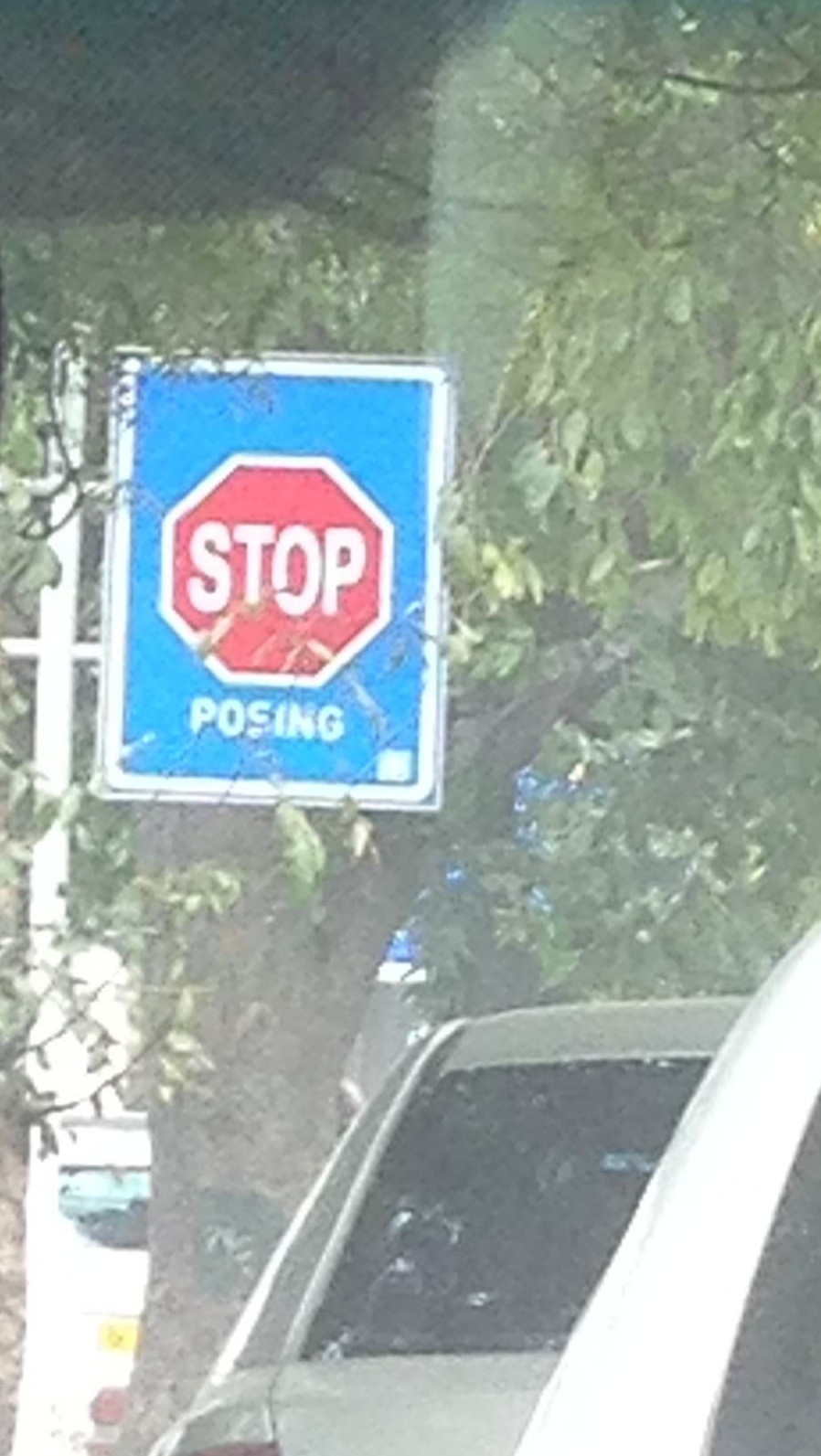
Street Sign, Daku, New Delhi, 2013

Street Sign, Daku, New Delhi, 2013

India has it’s own brand of urban art – which so far hasn’t found its way into museums, and exists exclusively on the streets. Some of it is created organically, appearing innocuously all around us. Organic street art like the work of Daku, seen above on street signs in Delhi and below, as graffiti in Mumbai, have a sense of the uncanny, making them subtly provoking. By almost becoming part of our urban surroundings, Daku’s works leave viewers pleasantly surprised and amused.

Graffiti, Daku, Lower Parel Mumbai, 2012, Courtesy NH7

Graffiti, Daku, Lower Parel Mumbai, 2012, Courtesy NH7

At other times, street art in India is created for specific festivals and public spaces as temporary installations on the street. Mumbai recently saw the return of the Kala Ghoda Festival, which serves as host to several installations on the street, some of which are constrained by the public nature of the festival. For example this work by Paresh Maity titled “Ants” that blends in with the surrounding mechanical environment in the city. What is lost at times is the sense of subtly and cheek that is evident in Daku’s work.

Paresh Maity, Ants, Scrap Metal, Mumbai 2013

Paresh Maity, Ants, Scrap Metal, Mumbai 2013

What is interesting is which we perceive to be as street art  and  how we value these types of works. How much are these installations or reproduced pictures of them worth? Is its value in the free access it allows individuals to art? How is value ultimately affected by the artist’s decisions to work more out of a studio than on the street? Would you buy this kind of work from an art fair?

Hena Kapadia is a Mumbai based art professional, who has a Master’s Degree in Modern and Contemporary Art World Practice.